
Finding Boulder Residents
Boulder is a city and the county seat at once. So a resident search can begin with several custodians. Each one answers a different question. The Assessor links a recorded owner and property address to a parcel. The Clerk and Recorder indexes deeds, liens, plats, marriage records, and similar instruments. Colorado Elections offers a one-person registration lookup. The Combined Court exposes a docket lead rather than a whole file. Carnegie Local History covers older gaps with directories, newspapers, obituaries, maps, and cemetery sources.
Let the clue choose the first step. An address belongs in the property and map systems. A full name needs a second field. That could be a ZIP, birthday, parcel, case year, or an exact directory date. Older households usually call for the library shelf paired with a census. Keep in mind that no single result proves residency. A mailing address may belong to a trustee or representative rather than the parcel itself.
- Write down the starting clue exactly, including spelling, middle initial, address form, ZIP, and date.
- Use the county property search or map to save the parcel, account, owner form, situs address, and legal-description summary.
- Search the recorder as a party, grantor, grantee, or legal description, then save the Reception Number and Book/Page.
- Check Colorado GoVote, the docket, or a fitting state index only after narrowing the person and jurisdiction.
- Use Carnegie, a counter visit, phone or mail copy request, or a CORA request when the online trail stops.
Where Boulder Records Live
A Boulder residents directory search has a clear local trailhead. Each office answers only its own question, though. The Recorder sits at 1750 33rd Street, Suite 201, Boulder. It takes counter, phone, and mail work through the Recording Division. The Assessor occupies the second floor at 1325 Pearl Street. Elections is next door in Suite 200 at 1750 33rd Street. Boulder County Public Health issues eligible local birth and death certificates. Its office sits at 3450 Broadway. County hours generally run Monday through Thursday, 7:30 a.m. to 5:00 p.m. The health office keeps its own weekday schedule.
Online search is convenient but not the only channel. Recorder copies can be requested online, by phone, or by mail. The Assessor provides a public map plus data downloads. Elections offers a single-person lookup and product-specific voter files. Public Health asks for an application, identification, eligibility proof, and payment. It also wants a delivery or pickup choice. Starting with the actual custodian keeps any Boulder resident lookup anchored to evidence. That beats working from a copied name.
Boulder County Clerk and Recorder
1750 33rd Street, Suite 201
Boulder, CO 80301
303-413-7770
Boulder Official Record Search
Boulder County Assessor
1325 Pearl Street, second floor
Boulder, CO
303-441-3530
Boulder Property Search
Boulder County Elections
1750 33rd Street, Suite 200
Boulder, CO 80301
303-413-7740
Colorado GoVote lookup
Boulder County Public Health
3450 Broadway
Boulder, CO
303-441-1154
Birth and death records
Current Boulder Resident Sources
Think of a current Boulder residents directory as a set of partial rolls. Every source has its own keeper, date, and narrow purpose. The property card points to a recorded owner and parcel. The voter lookup only tests whether a supplied identity matches a current registration. A court calendar exposes a case lead. A city permit or enforcement record adds address context. A local-history index may show a person for just one particular year.
| Source | Evidence | Keeper | Access |
|---|---|---|---|
| Assessor parcel card | Owner, situs and mailing fields, parcel, values, buildings | Boulder County Assessor | Public portal and daily data files |
| Voter lookup | Registration match and selected public status fields | Colorado Secretary of State | First, last, ZIP, birthday |
| Recorded-document index | Grantor, grantee, instrument, date, legal description | County Clerk and Recorder | Free index, paid copies |
| Court docket | Party lead, case number, hearing date and place | Colorado Judicial Branch | Web calendar and clerk request |
| Local-history collections | Historical names, addresses, obituaries, cemetery clues | Carnegie and BGS | Digital, microfilm, shelf, staff research |
One hit is never the whole story. Property evidence is not a household roster. Voter data is not a street browse. A docket row is not the court file. Indexes stay leads until the underlying image, clerk-held record, or dated publication supplies the proof, and the Boulder resident lookup workflow keeps those distinctions visible for a single name.
- Roll
- A record set maintained for a defined purpose, date, or jurisdiction. A voter or property roll is not a complete list of everyone at an address.
- Index
- Searchable descriptive data that points to a record, image, or custodian. The index entry is not always the underlying document.
- Criss-cross directory
- A reverse directory organized by address or street, useful for a dated occupant clue when that section survives.
- Parcel
- A mapped land unit tied to an assessor account and identifier. Its owner and mailing fields do not define every person who uses the property.
Boulder Official Rolls and Combined Leads
Official Boulder sources come with named custodians. They also carry a defined field set and a clear route for corrections or copies. A commercial people-search product works differently. It can blend public feeds, address history, marketing data, and user-submitted material into one paid report. Both may surface the same name. Yet the proof behind each is very different, which matters for any Boulder residents directory question.
| Source Type | Useful Signal | Boundary to Keep |
|---|---|---|
| Boulder County Assessor | Owner, parcel, situs or mailing address, buildings, values | Does not list every person at a property or prove physical presence |
| Boulder Recorder index | Grantor, grantee, instrument, date, legal description, image lead | Names belong to a recorded instrument, not automatically to a household |
| Colorado voter lookup | One supplied registration match and selected public fields | Protected, preregistered, and withheld records can create a non-match |
| Commercial search category | Possible lead assembled from mixed feeds or address history | May be stale, duplicated, or merged; confirm with the official custodian |
For a lawful Boulder residents directory lookup, start with the official source that matches the fact you need. Write down the search date. Keep the identifier beside the result. A combined report can suggest a next query, but it cannot replace the county parcel record, a recorder image, the court clerk, or a dated library source when a Boulder resident lookup has to stand on solid ground.
Boulder Recorder Search
The Boulder County Official Record Search offers a quick screen and an advanced screen. Recorded dates in the system reach back to June 1860. A separate verification notice applies. That span is a portal display. It is not a promise that every book, image, or older instrument is complete. When a gap appears, a counter request or copy request remains the fallback for Boulder deed research. Search terms can pinpoint a person, parcel, or instrument. The advanced form earns its keep when a common name produces noise. Tokenized party fields accept LASTNAME FIRSTNAME, and grantor and grantee searches run separately. Document type filters cover deeds, deed-of-trust records, liens, easements, plats, and marriage and civil-union records. They also cover court documents and public-trustee instruments. Many other Boulder County categories are available too. For a residents directory built on deeds, this recorder tool is the place to start.
| Portal field | How it helps |
|---|---|
| Department | Choose Real Estate Records or Marriage. |
| Search term | Combines grantor, grantee, subdivision, document type, or document number clues. |
| Recorded date | Sets an MM/DD/YYYY range or a recent-date preset. |
| Party, grantor, grantee | Add exact indexed names as tokens and test spelling variants. |
| Document type | Narrows the instrument family before reading results. |
| Reception, Book, Page | Uses the eight-digit reception number or book and page placement. |
| Legal description and OCR | Searches parcel language or text recognized from an image. |
A Boulder County recorder result card is detailed. It can carry the reception number, book and page, and page count. Recorded date, consideration, status, grantor, and grantee may appear too. References, document type, and a legal description round out the card. Watermarked viewing costs nothing on the public route. A nondigital copy runs $0.25 per page, and certification of a recorded document adds $1. To order by mail, include the names or reception number. Add the copy type, payment, and postage details.
For monitoring rather than searching, Boulder County PropertyAlert sends free email alerts. Alerts fire when a name hits the record books. Enter every spelling, including trust names. Common surnames will trigger false positives. So treat alerts as a prompt to check, not a verdict. Note: the Clerk records qualifying instruments but certifies neither legal validity nor factual truth.
The county recording instructions cover the public search, images, the office route, and copy choices. That page earns its keep in one situation. The online index may surface a lead, but the evidence needed is a certified or non-watermarked copy.
View the Boulder County public-records instructions before choosing an online, counter, phone, or mail route.
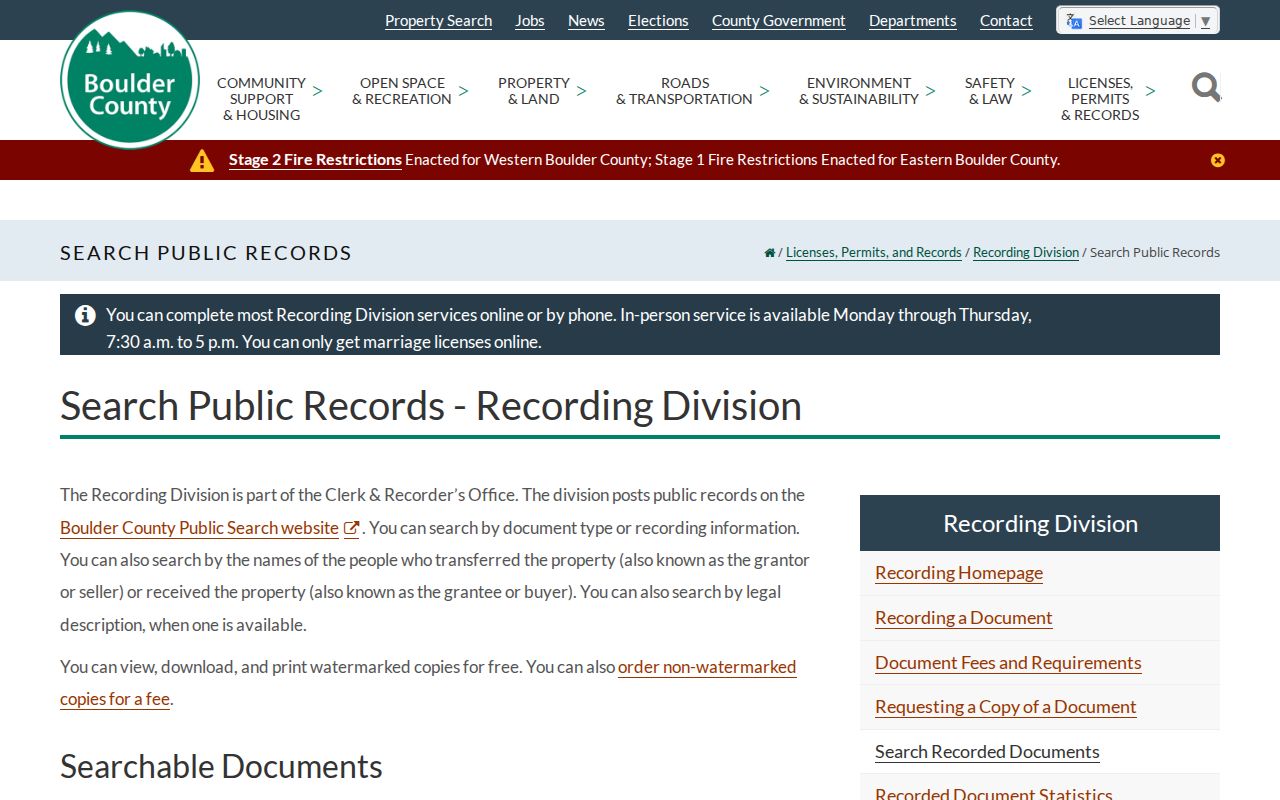
The instruction page keeps the search index and the official copy process connected.
Boulder Assessor and GIS
The Assessor Property Search takes several entry points. Feed it an address, owner name, street name, subdivision, account number, parcel number, or S-T-R. S-T-R stands for Section-Township-Range, written without a leading zero, as in 5-2N-69W. Draw a polygon, rectangle, circle, or line over parcels on the map. The coordinate tool accepts State Plane Feet, Decimal Degrees, DMS, DD Minutes, and UTM. Print Report, Print All Reports, and CSV export make an area or street review practical.
A parcel card can hold account and parcel numbers, tax year, account type, and property address. It may also list owner, subdivision, tax area, a legal-description summary, actual and assessed values, buildings, estimated acres, and a tax-distribution link. The recorded deed controls whenever the GIS summary runs short. Owners and Addresses downloads refresh around 4:00 a.m. daily. The county warrants nothing. It warns that exports can repeat owner names and addresses. Deduplicate the file first. Then verify each lead against the parcel report before it enters a Boulder residents directory list.
Situs versus mailing is the distinction that trips people up. Situs is where the parcel sits. Mailing is where tax mail goes. A trustee, representative, business, or PO Box can point somewhere else entirely. So an owner is one resident clue, never proof of who lives at the location. The City of Boulder eMapLink adds city parcel, enforcement, zoning, historic, and development layers. County GIS layers cover flood, precinct, open space, and emergency detail. Use eMapLink for a city report once the county parcel is fixed. Its layers add context but never replace the deed.
The Assessor office page lists counter locations and contact information. Read any map result with its account type, parcel, date, and address fields intact before weighing it against another source. For bulk work, the county data-download catalog is the right source for current file groups. Its no-warranty note matters when a CSV seeds a first-pass Boulder residents directory. Preserve the file date whenever an export feeds a review. Keep the original owner spelling too, because a later update can shift status, ownership, or boundaries. Open Boulder County Property Search to see the public interface. The map is an address and parcel tool, not a household roster. County GIS guidance describes the public-data context and the layers that separate a city parcel from surrounding county land. Confirm the parcel on the official map rather than trusting a copied address.
View the Boulder County Assessor office reference before comparing a property result with a resident record.
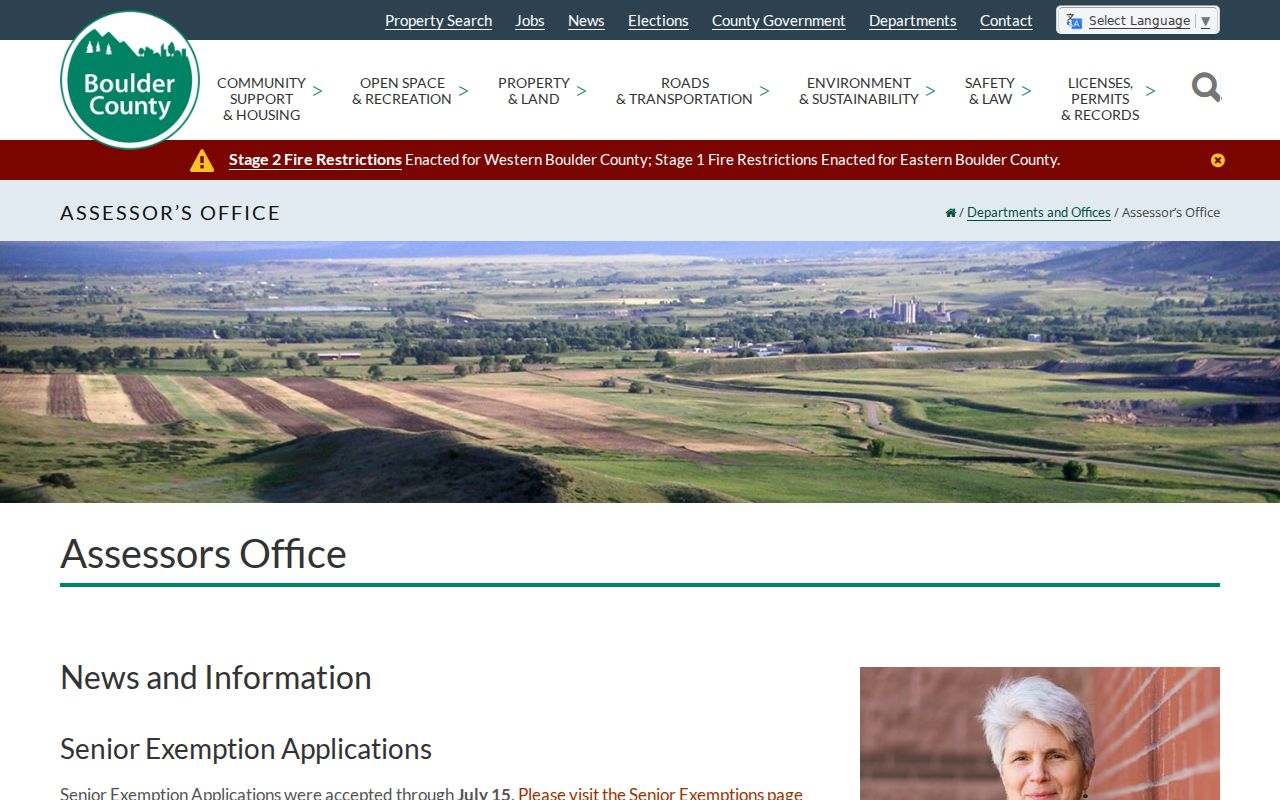
The office reference anchors the parcel search in the county custodian rather than an unverified directory copy.
Boulder Resident Voter Match
Colorado GoVote matches one person at a time. Enter First, Last, ZIP, and a birthday in MM/DD/YYYY format. If the person moved, the state page suggests trying the prior ZIP. A confidential voter or a preregistered 17-year-old may not appear. A non-match therefore proves nothing about whether someone lived in Boulder.
The Colorado voter FAQ lays out which fields stay public. Public items include name, residential address, party and affiliation date, and registration status. Birth year stays public, plus phone if supplied and gender if supplied. Whether the person voted in an earlier election is also public. Withheld are the Social Security number and driver-license number. Month and day of birth stay withheld, along with signature, email, protected-voter data, and ballot choices. County products such as VR-011B, CE-068, EX-002, and CE-077 add time-specific fields. Each requires a product request, a fee, certification, and respect for confidential exclusions.
Scale is not identity. The 2024 Boulder County report lists 235,603 active registrations, including 68,342 in the Boulder row. Those figures describe a dated election system, not a street roster. Use GoVote for a supplied identity. Use the county Elections Division for a permitted data product. Never turn a bulk file into an unrestricted list.
Open the Colorado voter registration lookup to see the fields that separate a name from a registration match.
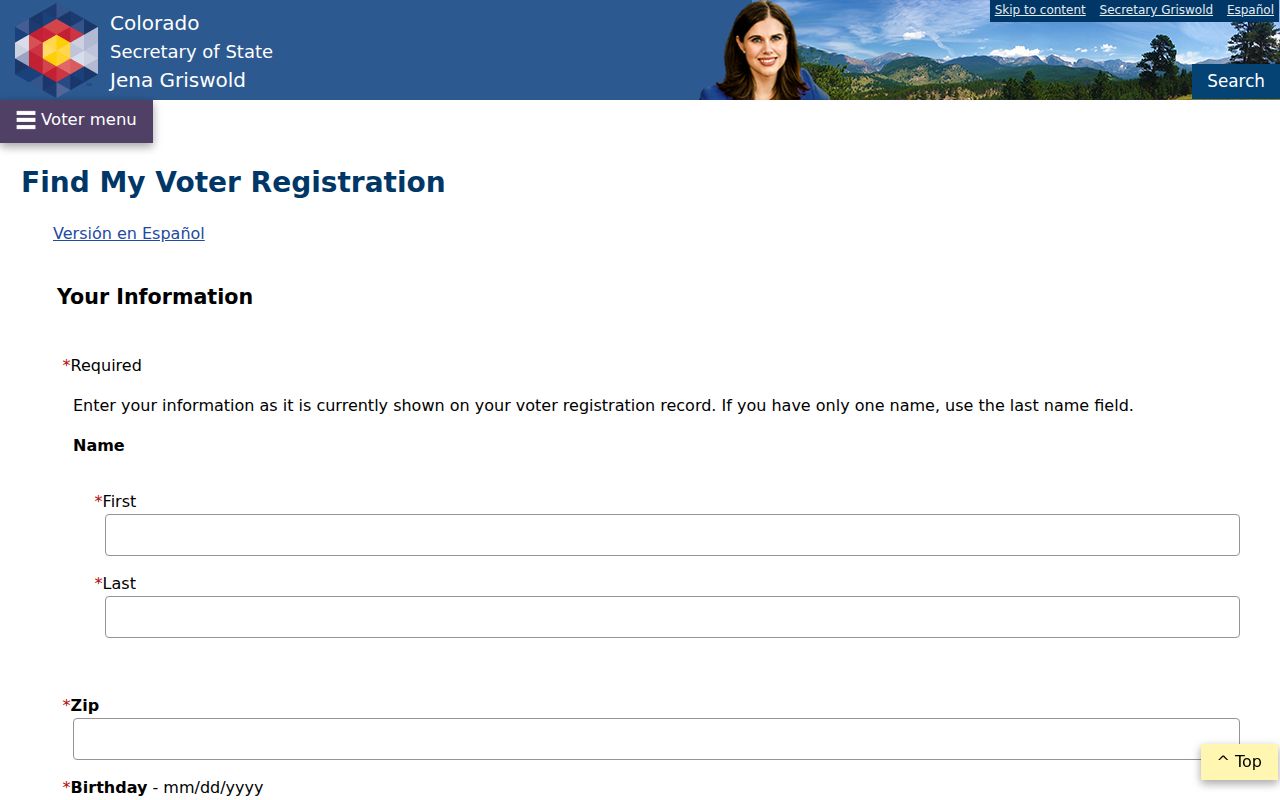
The form's ZIP and birthday requirements show why a single-name search is too weak to confirm a Boulder resident.
Boulder Court Docket Leads
The Colorado Judicial Branch docket, narrowed to county 7, works as a calendar and index lead for Boulder County. It is not a full case file. Search filters run wide. You can narrow by judicial district, county, courthouse, court type, division, date range, case year and sequence, case class, party name, business name, or attorney name and bar number. One filter beyond a date is required. Each visible row may carry the party display, case number, hearing type, date, time, duration, location, appearance mode, and courtroom.
A docket event is only a hearing line. It is not the complaint, an exhibit, the judgment, or the complete register of actions. Sealed, juvenile, protected, and restricted matters stay out of ordinary public access. The Boulder Combined Court counter sits at 1777 6th Street. It offers a records email and phone route. For actual documents, use the statewide record request form. It takes a case number, case type, year, county, party details, date of birth if known, and selected items such as an ROA, decree, order, probate filing, or certified copy.
Fees on the form are concrete. A name search runs $5. Pages cost $0.25 each. Certified or exemplified documents run $20. Research or redaction is $30 per hour after the first hour. The response target is three business days, subject to protected-record rules. Federal matters go through PACER. Boulder Municipal Court keeps its own records and transcript route. When the calendar gives only a lead, the court custodian finishes the job.
Open the Boulder-filtered Colorado docket to distinguish a hearing row from a court file.
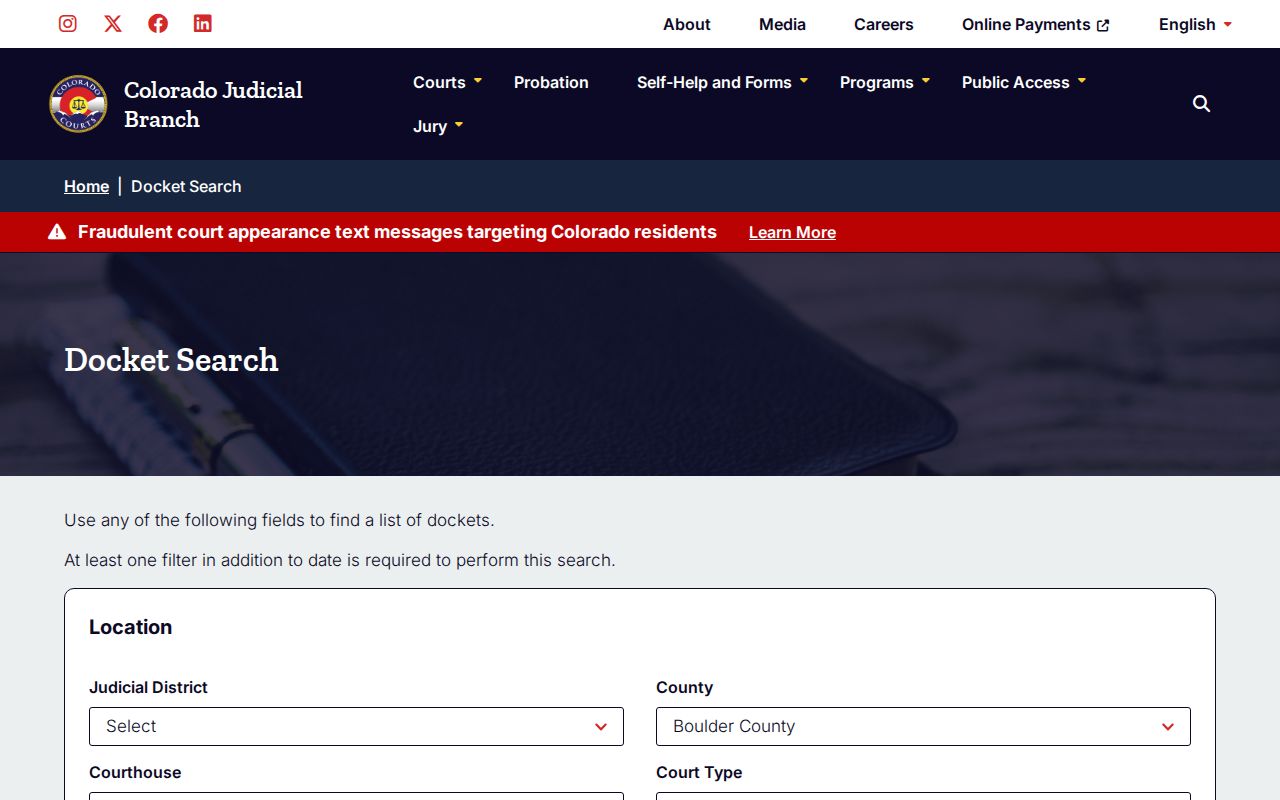
The docket screen is useful for a case number and courthouse context, but the clerk controls the underlying documents.
Boulder Vital Records
Vital records in Colorado do not sit in one place. Birth, death, marriage, civil-union, and divorce files each have a different custodian. Under C.R.S. section 25-2-117, these records are confidential by law. An old date alone does not unlock a certificate. No official source confirms a blanket genealogy opening period. So treat free searching as the exception rather than the rule. Boulder County Public Health holds Colorado-born births from 1904 to the present. It also holds Boulder County deaths from 1901 to the present on its local pages.
Copies take more than a request. Birth and death certificates require a qualifying relationship, legal authority, or direct and tangible interest. They also call for identification and an application. The current county web fee is $25 for the first birth copy. It is $20 for each additional copy in the same order. Marriage application and recording is $30, and a certified marriage copy is $1.25. Divorce decrees belong to the district court. Counter, mail, state-office, library, and archive routes exist. Each answers a different part of a family-history question.
A modern certificate is not a public resident roster. Check the county application, the accepted-ID instructions, and the custodian response before assuming a release. Historical newspapers, obituaries, cemetery files, and directory clues can often help. They can identify an event without ever producing a certified modern record.
Review Boulder County birth-certificate access for eligibility, identification, and current request channels.
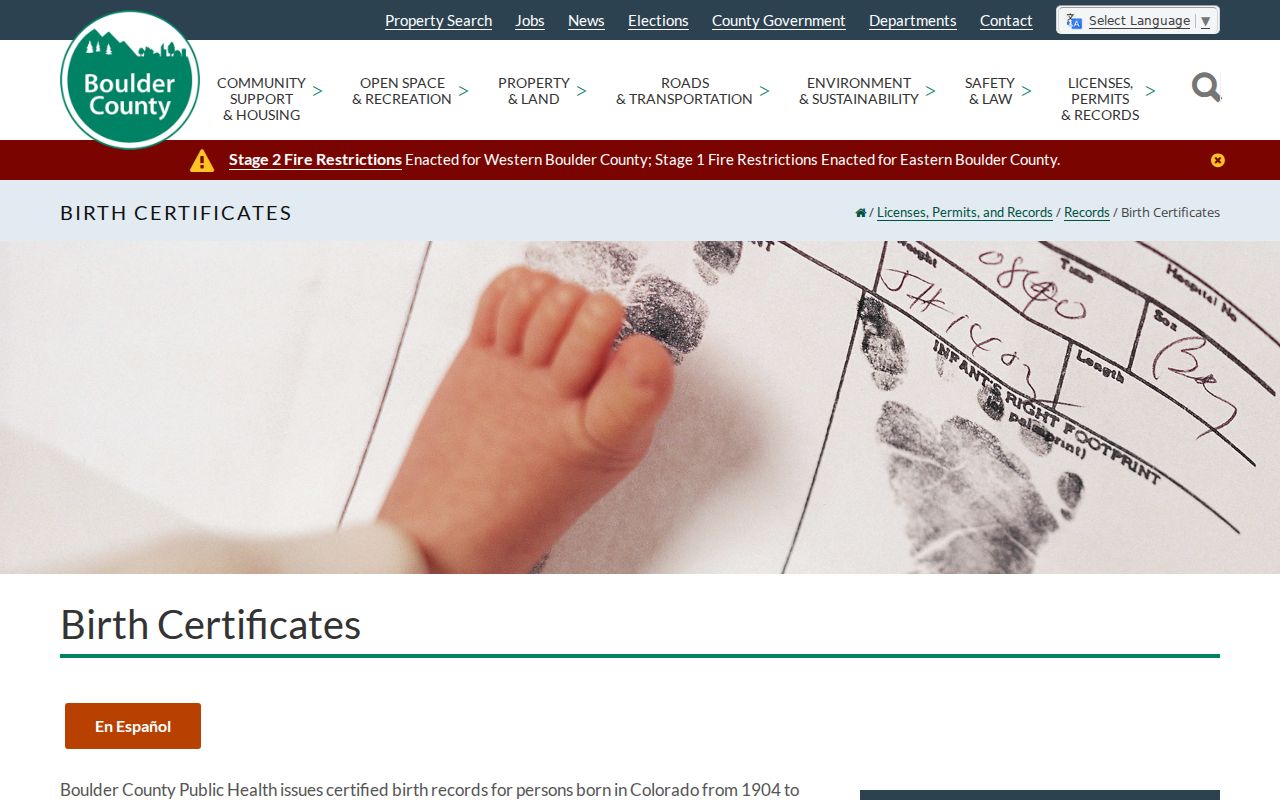
The county page makes the difference between a family-history lead and a releasable certified copy clear.
Boulder City Records
City records add address and civic context that county title records cannot match. Central Records keeps the centrally maintained files. These include ordinances, resolutions, and council packets. Easements, leases, and open-space acquisitions sit there too, along with annexations, development agreements, and completed land-use files. Other departments hold their own material. Police, Fire, and Planning remain separate custodians. A City of Boulder CORA request may therefore need the right department. It cannot always go to one central mailbox.
Several city tools connect addresses to records. eMapLink links an address to a city parcel report and enforcement summary. EnerGov CSS offers guest searches across permit, plan, inspection, and license categories. Code-concern results reach back only 24 months and may include an adjacent right-of-way. The Municipal Court dashboard is an aggregate statistics tool. It begins in early 2025 and is not a complete name index. Liquor-license map fields display a location, trade name, permit, status, and license type.
Columbia Cemetery adds another local name source. Its index and map cover nearly 6,500 interred people. They span 10.5 acres and draw on thousands of sources. Some locations remain unknown. More than 700 Section X entries are among them. A cemetery result is strongest when the source abbreviation, ledger, obituary, or directory page gets checked.
For a city-held record not online, the Colorado Open Records Act overview explains the state framework. Boulder City instructions describe a three-working-day response. A seven-working-day extension is possible. A $41 research or retrieval charge applies after the first hour.
Historical Boulder Directories
Carnegie Local History is the historical shelf behind the older Boulder residents directory trail. The room sits at 1125 Pine Street. Walk-in hours run Thursday and Saturday from noon to 5:00 p.m. Appointments are available at other times. Nothing circulates. The scope covers directories, photographs, oral histories, and newspapers. It also includes obituary help, cemetery and mortuary sources, church histories, and local maps.
Directory evidence starts with the Ella M. Travis indexes. These cover Boulder County entries from 1892-1898 and a 1904 county index. They also cover Boulder City indexes from 1901-1903 and 1905-1908 plus 1911. A separate 1871 Rocky Mountain directory and Colorado gazetteer rounds them out. Catalog references continue through 1974. NARA lists Boulder-area microfilm for 1926, 1928, 1930, and 1932. No publisher sequence, complete continuous run, or last printed year is established. The right next step is a shelf or catalog check, not an assumed publisher.
The newspaper collection reaches back to 1869. Daily Camera microfilm runs from June 1891 to the present. A June 2009 gap is noted. Boulder Genealogical Society indexes cover obituaries from 1859-1925 and from 1960 to the present. A directory entry, obituary, cemetery crosswalk, or newspaper page can supply a dated address and a family connection. The Boulder city directory collections page handles the historical shelf in full.
Other Boulder Public Trails
Not every Boulder lookup starts with a resident roll. The county Daily Booking and Listing Reports cover current jail activity. Colorado's name-based ICHC offers a one-person criminal-history search limited to Colorado, at $6 per result. Sealed and juvenile records stay out of that system entirely.
For professional verification, Colorado DORA MyLicense checks a current license. Search by profession, name, type, number, or status. The Secretary of State business search handles business names and trademarks. It also covers trade names, IDs, and document numbers. Great Colorado Payback is the official unclaimed-property route. Each can yield an affiliation lead for a residents directory search. But none supplies a full household record or a guaranteed current address.
Read Colorado's name-based history information before treating a one-person result as a final identity match.
The state description explains the Colorado-only scope and the classes that can be excluded from a result.
Open Colorado DORA license verification when a public credential is the record question.
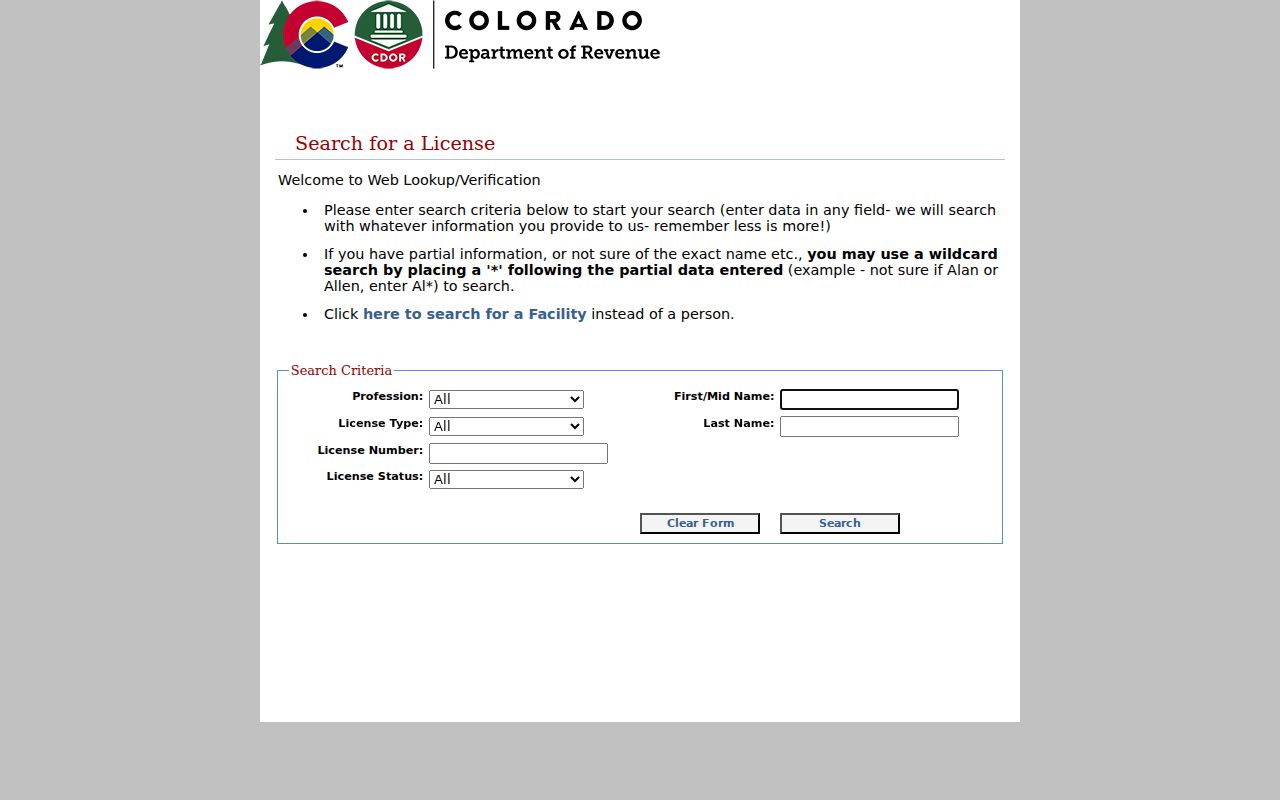
A license search confirms a current credential record, not that the licensee lives at a particular Boulder parcel.
Visit Great Colorado Payback for an official claim lead instead of relying on an unsolicited message.
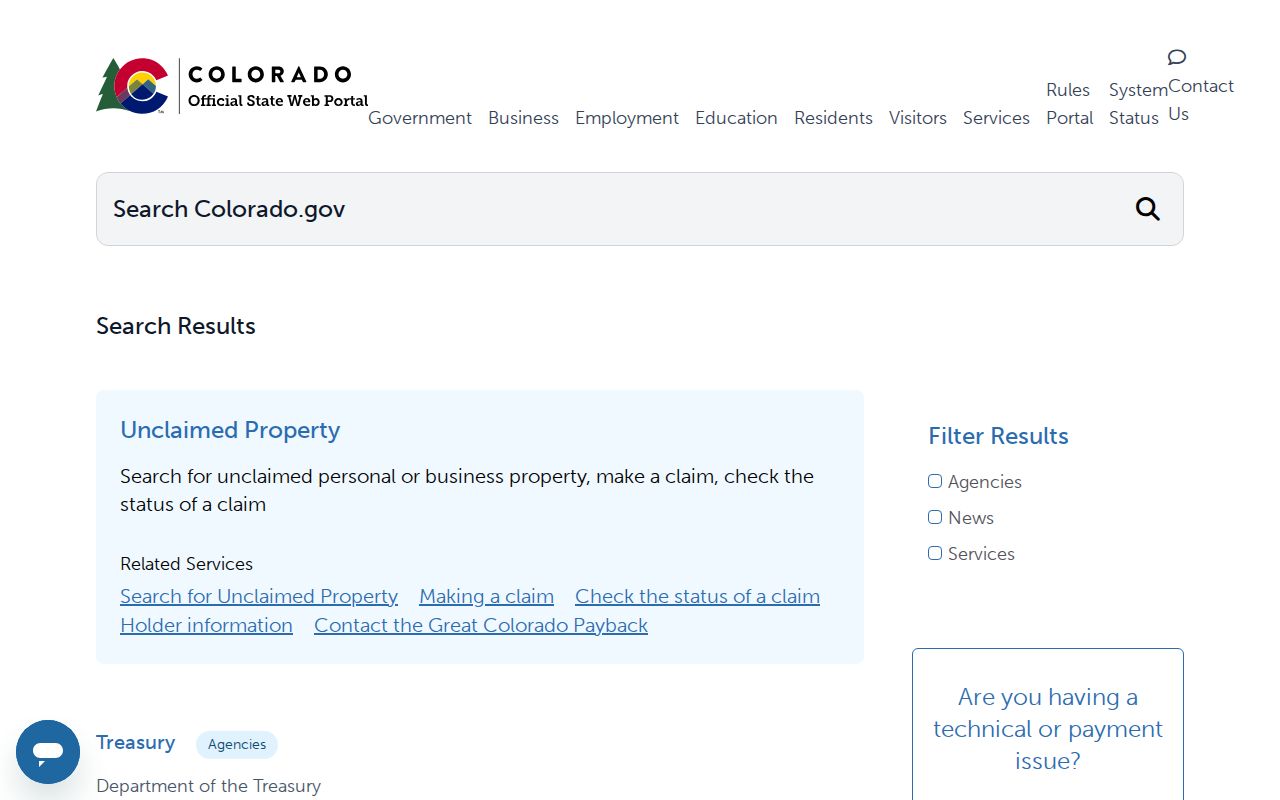
The state-linked route keeps the name search and proof-of-claim steps with the proper custodian.
Open Boulder County booking and listing reports only for the current public route described by the county.
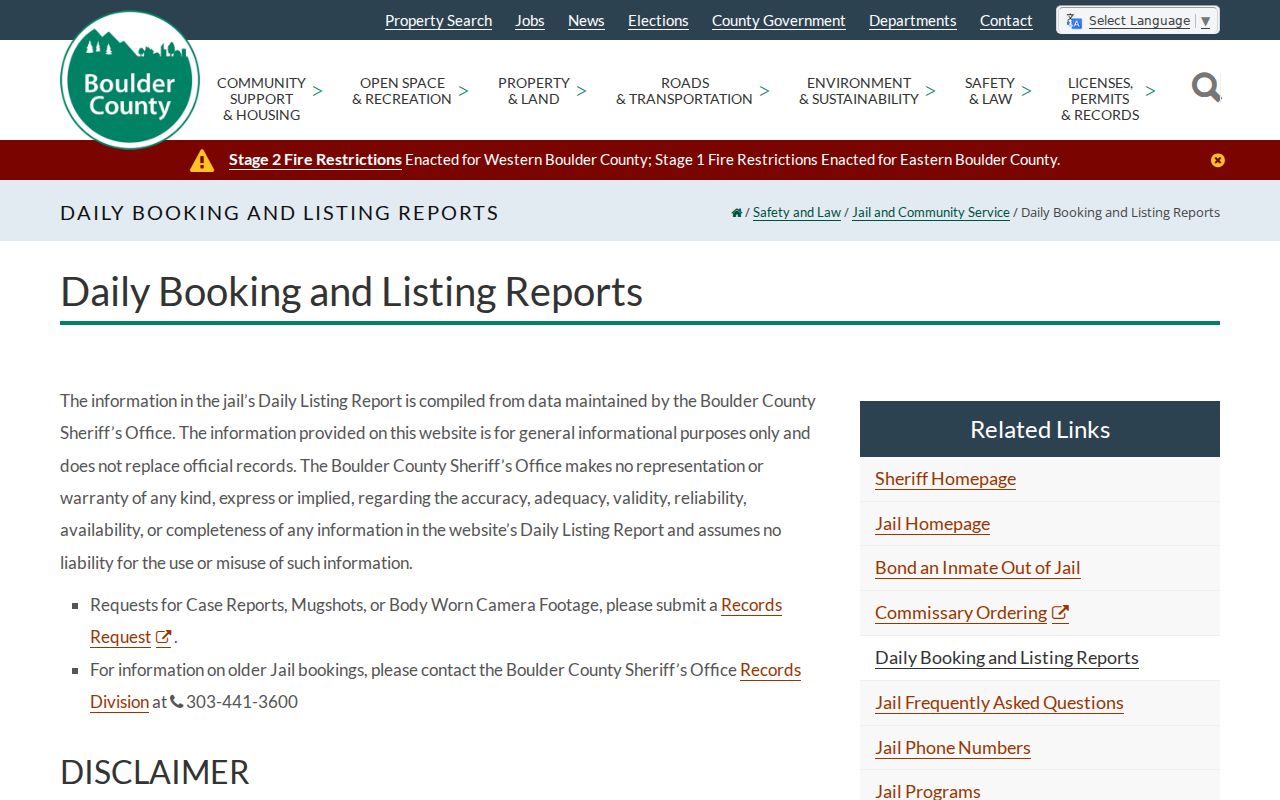
The report page itself notes the public route; older records and exact fields require the Sheriff Records custodian.
Boulder ZIP Geography
A ZIP code is a postal key, not a city-limit line. Boulder-area codes include 80301 through 80305, plus extended and nonstandard codes like 80306-80310, 80314, 80321-80323, 80328, and 80329. For a specific address, compare the USPS lookup, the parcel situs, the CityLimits and Annexation layers, and the county postal list.
Gunbarrel and Gold Hill carry Boulder postal labels while sitting outside the city boundary. The 2026 East Boulder annexation makes the current boundary worth dating too. Treat a ZIP search as a narrowing step before a parcel or street review, not a substitute for the Boulder street directory address chain.
Boulder Privacy Boundaries
Missing entries in a residents directory often have a lawful explanation. Colorado's Address Confidentiality Program gives eligible survivors a substitute address and confidential mail forwarding. Protected voters and preregistered people may be excluded from ordinary lookup results. Vital records stay confidential under section 25-2-117. Courts restrict sealed, juvenile, and family files, and DMV-derived personal data falls under the federal Driver's Privacy Protection Act rather than county parcel rules.
Use these records for family history, reconnecting, civic research, property curiosity, and correcting a record with its custodian. Keep names and addresses in context. Report suspected fraud through official channels, and never let a records trail become a tool for monitoring or intimidating another person.
Lawful personal use. Boulder records are public in defined ways, but anti-stalking and anti-harassment rules still apply. Verify with the custodian and do not use a Boulder residents directory search to stalk, harass, or harm anyone.
Recent Boulder Records Changes
Boulder record access keeps shifting. The Clerk and Recorder's 2024 accountability report describes a new public-records platform. It also covers same-day images, removed digital view fees, and digital certified copies. The current recording fee page took effect July 1, 2025. It lists a $43 document recording fee. Because these are dated operational facts, check the live custodian page. Do not rely on an old fee or turnaround figure.
History shapes the records too. The original Boulder County Courthouse was built in 1882 and destroyed by fire on February 9, 1932. Which resident, deed, or court books were lost is unclear. So the fire is a reason to verify a gap rather than assume a missing series. City ledgers, newspapers, directories, and the current recorder index may each preserve a different part of the trail.
That layered history is the practical meaning of a Boulder residents directory. Start with the narrow official source. Keep the date and identifier. Then move to the counter, library, archive, or records request when the first screen cannot answer the question.